
RESULTS
- Contract: €950K became €10.8M (11× expansion)
- Annual savings: €14.2M, verified by CFO’s team
- Call volume: Down 40%, about 30,000 fewer calls per month
- Resolution time: 8.0 minutes down to 6.2 minutes
- NPS: 62 to 75
- Cost per interaction: Down 38%
Beyond the numbers: the methodology became BCI’s standard for evaluating any AI investment. The CFO presented it to a Chilean banking consortium. Salesforce partners used the same framework to close €12M+ in deals after I left.
THE STORY
In 2019, I walked into a situation where the CFO was about to kill a €950K pilot. Eighteen months later, that pilot had become a €10.8M contract and was saving the bank €14.2M annually. The difference wasn’t better technology. It was getting everyone to agree on what success actually looked like before we touched anything else.
WHAT I FOUND
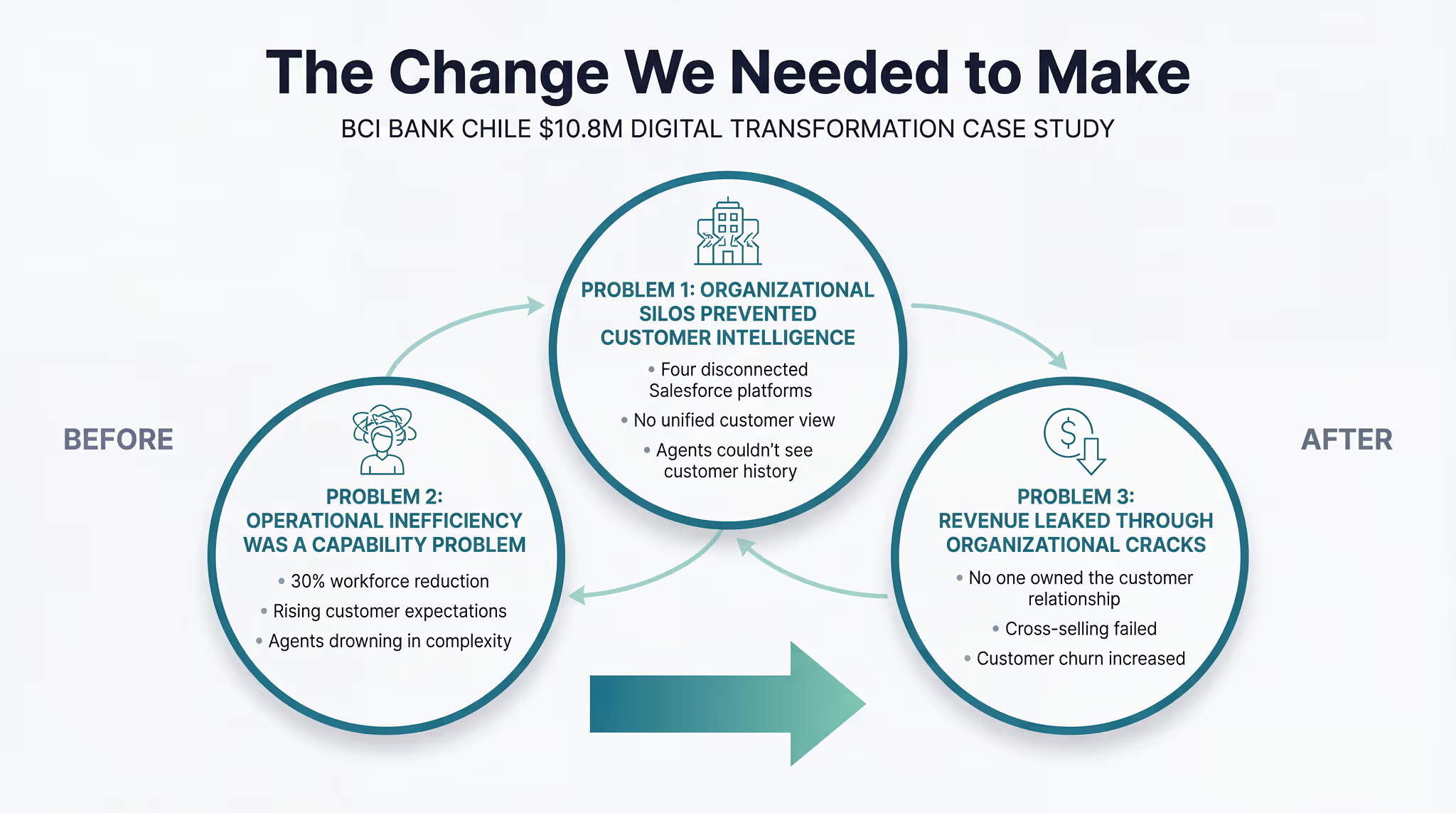
BCI’s contact center was a mess. Seven disconnected systems. Agents losing 45 seconds on every call just switching between interfaces. Supervisors triaging emergencies at 3am via WhatsApp because the official systems couldn’t handle peak load.
The Salesforce + Einstein pilot had been running for months, but nobody could say if it was working. The CFO told me directly: “We’ve spent almost a million euros and I can’t tell you if it’s working.”
He wasn’t wrong to be frustrated. The pilot had no baseline metrics, no agreed targets, no way to measure progress. People had opinions about whether it was helping, but no data.
The Salesforce + Einstein pilot had been running for months, but nobody could say if it was working. The CFO told me directly: “We’ve spent almost a million euros and I can’t tell you if it’s working.”
He wasn’t wrong to be frustrated. The pilot had no baseline metrics, no agreed targets, no way to measure progress. People had opinions about whether it was helping, but no data.
MY ROLE
Strategy & Innovation Executive Director, Salesforce Ignite LatAm
I had full ownership of the transformation, from strategy through delivery. Reported directly to the CFO. Embedded with agents at peak hours, built the measurement framework with the CFO first, ran a 15-agent pilot measured weekly. The engagement ran 18 months.
I had full ownership of the transformation, from strategy through delivery. Reported directly to the CFO. Embedded with agents at peak hours, built the measurement framework with the CFO first, ran a 15-agent pilot measured weekly. The engagement ran 18 months.
WHAT I ACTUALLY DID
I stopped the technology work for two weeks. Before we wrote another line of code or configured another workflow, I wanted to know what success looked like in numbers the CFO would actually care about.
The First Week
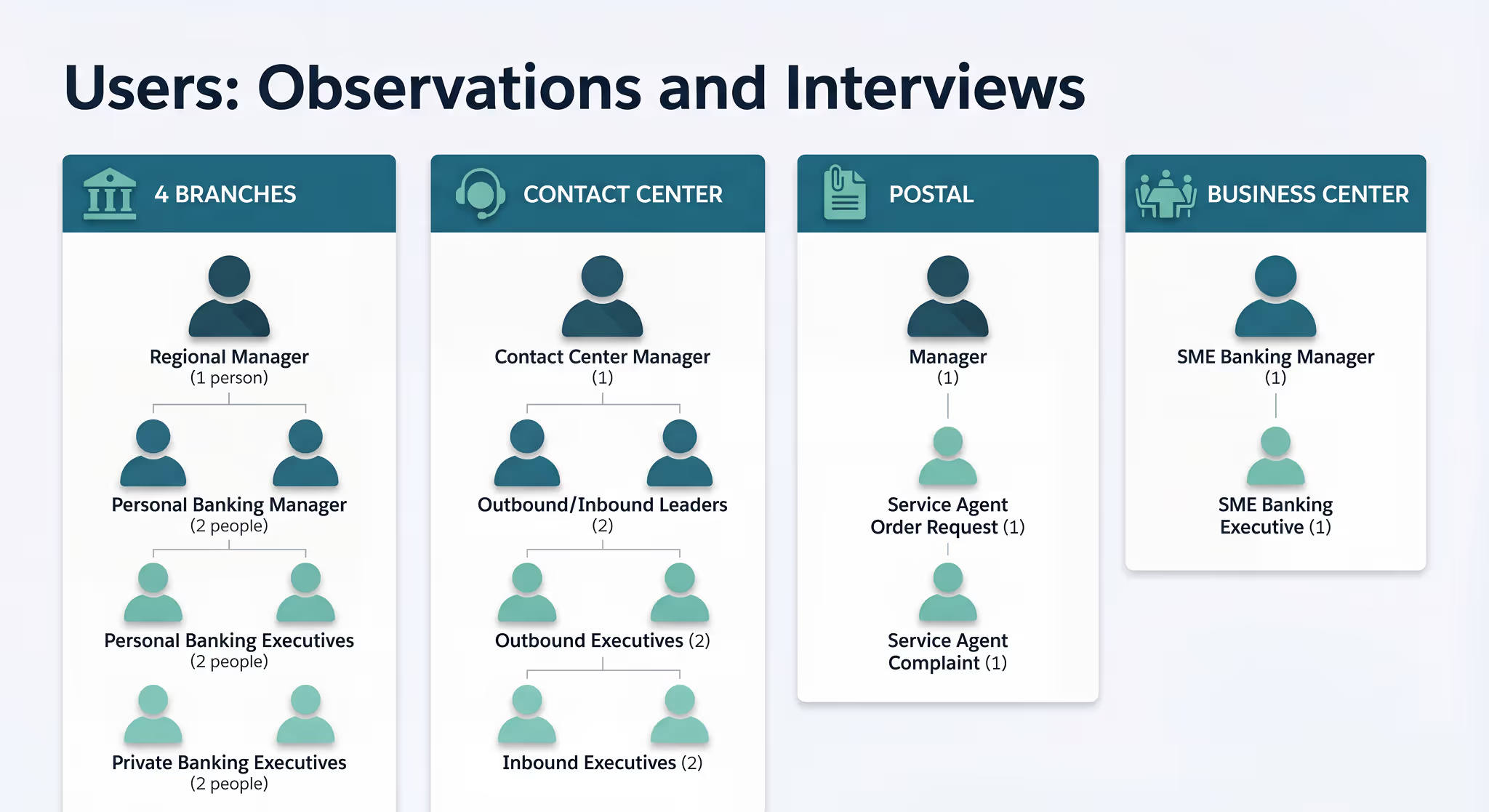
I spent it in the contact center. Not in meetings about the contact center. Actually sitting with agents during peak hours, watching them work, timing how long things took. I saw agents toggle between seven different screens to answer a single billing question. I saw supervisors keeping spreadsheets on their personal laptops because the official reporting was useless. I saw the 3am WhatsApp groups.
The Second Week
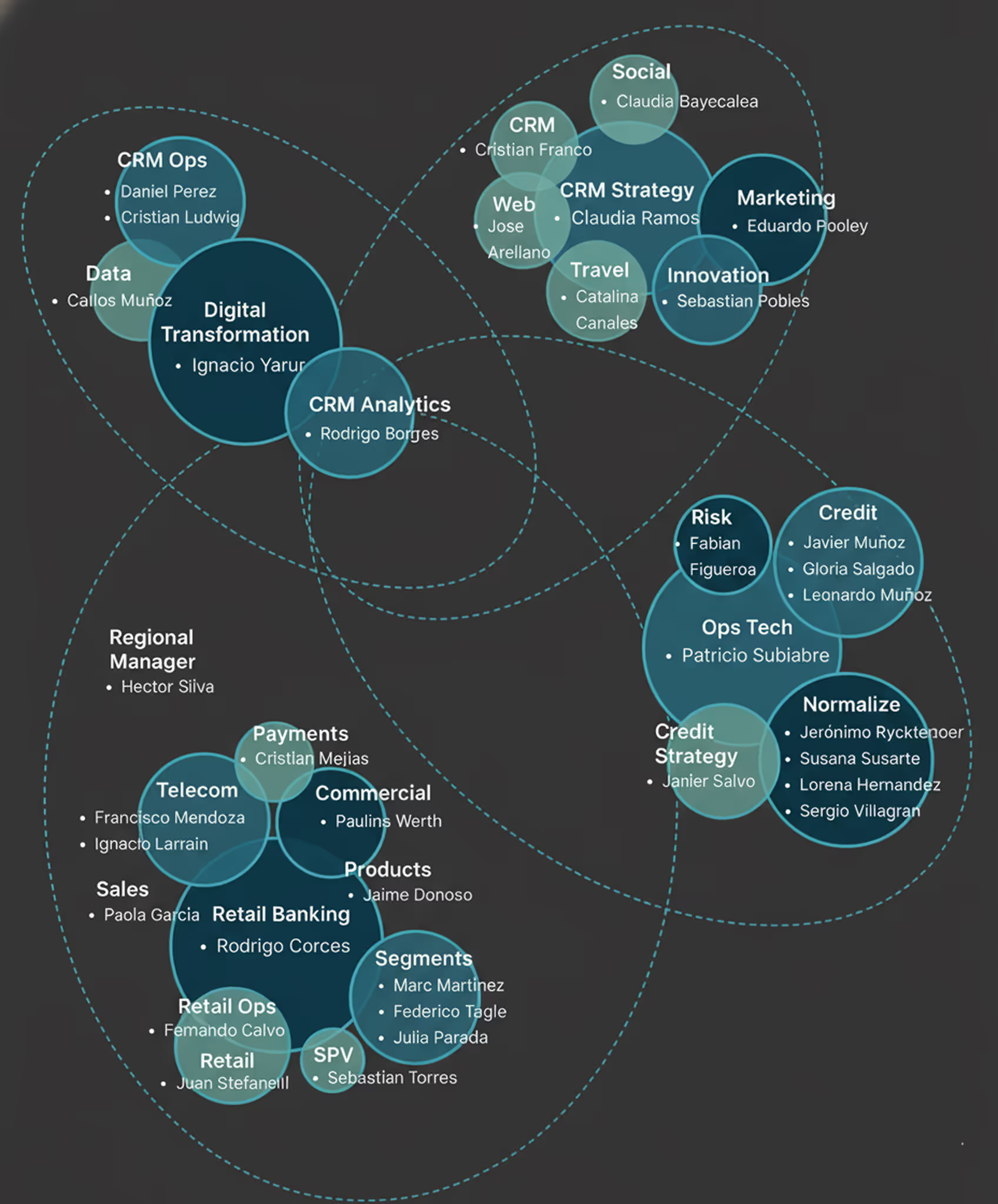
I brought 40 people into a room. CFO, department heads, operations, technology. One question: how many fewer calls do you need annually to justify this investment, and what’s that worth in pesos?
We worked it out together: - Current volume: 300K calls annually - Target: 40% reduction - Annual target: €14.2M in savings.
The CFO signed off on that framework, not just the technology plan. Now everyone knew what we were trying to achieve.
We worked it out together: - Current volume: 300K calls annually - Target: 40% reduction - Annual target: €14.2M in savings.
The CFO signed off on that framework, not just the technology plan. Now everyone knew what we were trying to achieve.
Weeks 3-8: The Pilot
We started small. 15 agents, one call type. Measured everything weekly against the baselines I’d documented.
Week 4 almost killed us. The numbers looked worse than before we started. Agents were slower because they were learning new workflows. The CFO called me and asked if we should stop. I asked for two more weeks. I didn’t know if it would work, but I knew the data was too early to be meaningful.
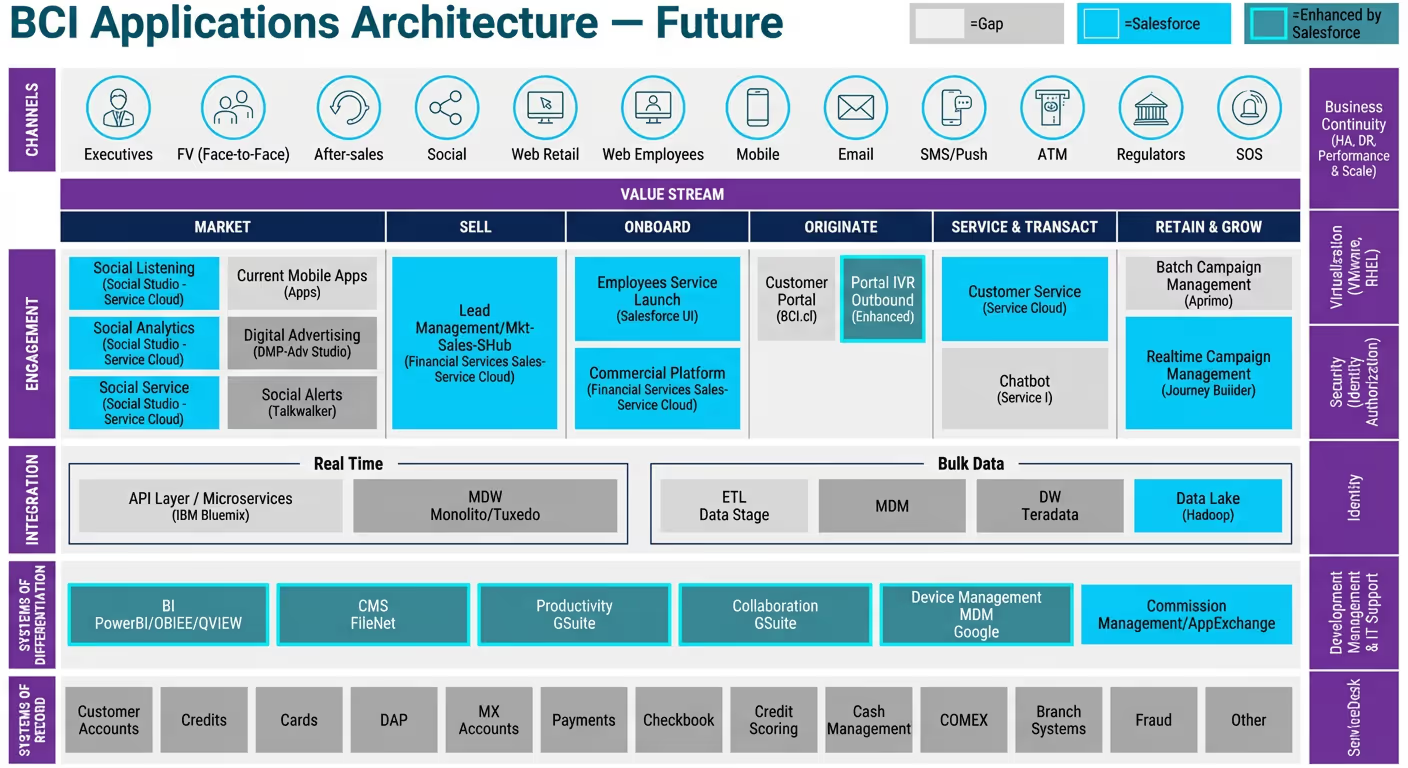
By week 6, the agents had stopped fighting the new system. By week 8, we had real improvement. The problem hadn’t been the Einstein recommendations. The problem was that agents were seeing seven different customer histories across seven systems. When we unified the data, the AI recommendations suddenly made sense to them.
Week 4 almost killed us. The numbers looked worse than before we started. Agents were slower because they were learning new workflows. The CFO called me and asked if we should stop. I asked for two more weeks. I didn’t know if it would work, but I knew the data was too early to be meaningful.
By week 6, the agents had stopped fighting the new system. By week 8, we had real improvement. The problem hadn’t been the Einstein recommendations. The problem was that agents were seeing seven different customer histories across seven systems. When we unified the data, the AI recommendations suddenly made sense to them.
Months 3-18: Scaling
We expanded to all agents, all call types. I kept weekly dashboards and did monthly reviews with the CFO where we went through the numbers together. No surprises. When we hit a problem, we talked about it. When something worked better than expected, we understood why.

WHAT I TOOK AWAY
Most AI projects I’ve seen fail for the same reason this one almost failed. People deploy technology and hope that success will be obvious afterward. It rarely is.
The measurement framework wasn’t bureaucracy. It was the thing that let us survive week 4 when the numbers looked bad. It was the thing that let me ask the CFO for two more weeks with credibility. And it was the thing that let everyone agree, at the end, that the project had actually worked.
I don’t think the technology mattered as much as we thought it did at the start. What mattered was getting 40 people to agree on what success looked like before we started arguing about solutions.
The governance documentation we created, all those weekly dashboards and monthly reviews, turned out to be useful later in ways I didn’t anticipate. When regulators started asking banks about AI governance and audit trails, BCI already had 18 months of documentation ready.
The measurement framework wasn’t bureaucracy. It was the thing that let us survive week 4 when the numbers looked bad. It was the thing that let me ask the CFO for two more weeks with credibility. And it was the thing that let everyone agree, at the end, that the project had actually worked.
I don’t think the technology mattered as much as we thought it did at the start. What mattered was getting 40 people to agree on what success looked like before we started arguing about solutions.
The governance documentation we created, all those weekly dashboards and monthly reviews, turned out to be useful later in ways I didn’t anticipate. When regulators started asking banks about AI governance and audit trails, BCI already had 18 months of documentation ready.
