SPAZIO LENOVO
15% Global Price Increase, No Volume Loss
Milan Pilot → 14 Countries | Win Rate Doubled vs Dell/HP
RESULTS
- Price: 15% global increase without losing volume
- Win rate: 28% → 47% vs Dell/HP in premium segment (nearly doubled)
- Sales cycle: 3 visits → 1.7 visits (43% faster)
- NPS: 58 → 72 (+14 points)
- Brand perception: “Innovative” ranking jumped from 4th to 1st in category
- Scale: Milan pilot became global template for 14 countries within 6 months
The executive sponsor who championed this initiative was promoted to Head of Global Retail. That’s usually a better indicator than any award.
THE STORY
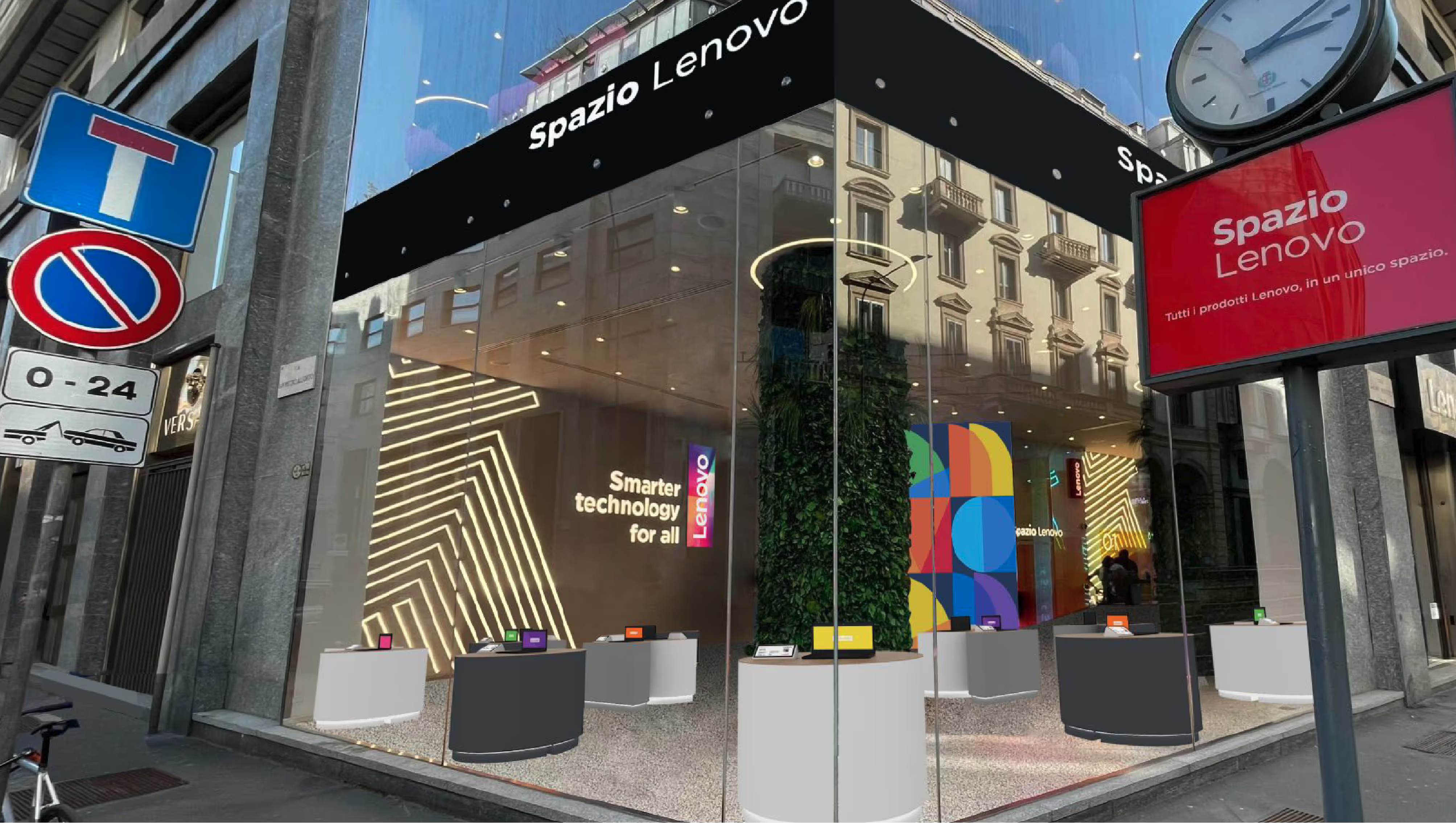
Lenovo makes excellent laptops. But in retail, those laptops sat on shelves next to Dell and HP, differentiated only by spec sheets and price stickers. Customers compared features, picked the cheapest option, and left. The brand promise of “Smarter technology for all” existed in advertising but died on the sales floor.
The brief was to redesign Lenovo’s retail presence in Italy. The real opportunity was to prove that experience, not specs, could justify premium pricing at global scale.
The brief was to redesign Lenovo’s retail presence in Italy. The real opportunity was to prove that experience, not specs, could justify premium pricing at global scale.
WHAT MADE THIS DIFFERENT
Most retail redesigns stay local. A flagship store opens, gets press coverage, then sits as an isolated experiment while the rest of the business continues unchanged.
We designed Spazio Lenovo specifically to scale. Every element, the fixtures, the customer journey, the service model, was documented as a modular system that could be adapted to different store sizes and markets. The question wasn’t “can we make Milan beautiful?” It was “can we make Milan replicable?”
Within six months of the Milan launch, Lenovo’s global retail team adopted the model for 14 countries. Not because of the design awards. Because the business results from Milan were undeniable.
We designed Spazio Lenovo specifically to scale. Every element, the fixtures, the customer journey, the service model, was documented as a modular system that could be adapted to different store sizes and markets. The question wasn’t “can we make Milan beautiful?” It was “can we make Milan replicable?”
Within six months of the Milan launch, Lenovo’s global retail team adopted the model for 14 countries. Not because of the design awards. Because the business results from Milan were undeniable.
MY ROLE
Strategy Director, Sketchin (BIP Group)
I led the end-to-end experience transformation: retail environment design, customer journey architecture, service ecosystem, and partner alignment across 15+ implementation partners. The engagement ran from initial strategy through global rollout documentation.
I led the end-to-end experience transformation: retail environment design, customer journey architecture, service ecosystem, and partner alignment across 15+ implementation partners. The engagement ran from initial strategy through global rollout documentation.
WHAT I ACTUALLY DID
The Research
We started by watching how people actually bought laptops. The pattern was consistent: customers walked in knowing they wanted a laptop, compared specs on paper, asked about price, and bought whatever seemed like the best deal. Brand didn’t matter. Experience didn’t exist.
The insight was simple. Lenovo’s engineering was never the problem. The experience surrounding it was. You can’t charge premium prices when the environment screams commodity.
We started by watching how people actually bought laptops. The pattern was consistent: customers walked in knowing they wanted a laptop, compared specs on paper, asked about price, and bought whatever seemed like the best deal. Brand didn’t matter. Experience didn’t exist.
The insight was simple. Lenovo’s engineering was never the problem. The experience surrounding it was. You can’t charge premium prices when the environment screams commodity.
The Partner Problem
Three months in, we had a design that worked beautifully in renderings. Then we tried to build it.
Spazio Lenovo required coordination across 15+ partners: fixture manufacturers, digital signage vendors, lighting specialists, training providers, and Lenovo’s own regional teams. Everyone had different timelines, different standards, different definitions of “premium.”
The first prototype space was a disaster. The fixtures arrived late. The lighting was wrong. The digital displays showed test patterns on opening day because nobody had coordinated the content pipeline. I spent two weeks in Milan personally managing the punch list because the project was about to become an expensive embarrassment.
What saved us was documenting everything obsessively after that first failure. Every specification, every vendor responsibility, every quality checkpoint. The Milan store eventually opened properly, but more importantly, the documentation meant the next 13 countries didn’t have to learn the same lessons.
Three months in, we had a design that worked beautifully in renderings. Then we tried to build it.
Spazio Lenovo required coordination across 15+ partners: fixture manufacturers, digital signage vendors, lighting specialists, training providers, and Lenovo’s own regional teams. Everyone had different timelines, different standards, different definitions of “premium.”
The first prototype space was a disaster. The fixtures arrived late. The lighting was wrong. The digital displays showed test patterns on opening day because nobody had coordinated the content pipeline. I spent two weeks in Milan personally managing the punch list because the project was about to become an expensive embarrassment.
What saved us was documenting everything obsessively after that first failure. Every specification, every vendor responsibility, every quality checkpoint. The Milan store eventually opened properly, but more importantly, the documentation meant the next 13 countries didn’t have to learn the same lessons.
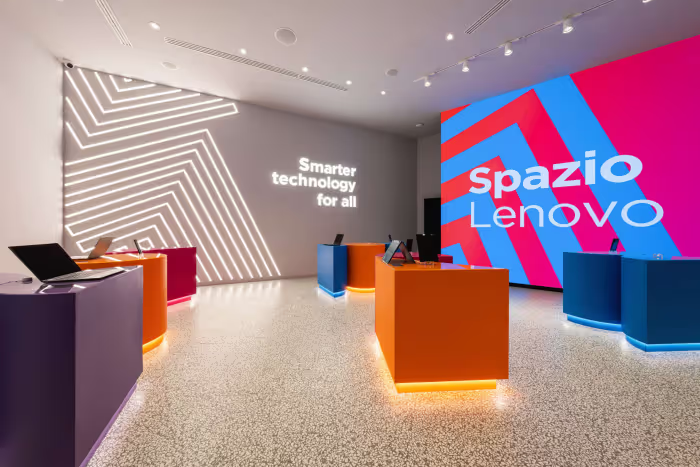
We rebuilt retail around context, not specs. Instead of laptops lined up for comparison, we created zones: gaming setups where you could actually play, creative workstations with real software, home office environments that showed how the products fit into life.
The staff model changed too. Instead of salespeople pushing features, we trained advisors who asked about how customers worked. The conversation shifted from “this one has 16GB RAM” to “tell me about your workflow.”
The staff model changed too. Instead of salespeople pushing features, we trained advisors who asked about how customers worked. The conversation shifted from “this one has 16GB RAM” to “tell me about your workflow.”
The Modular System
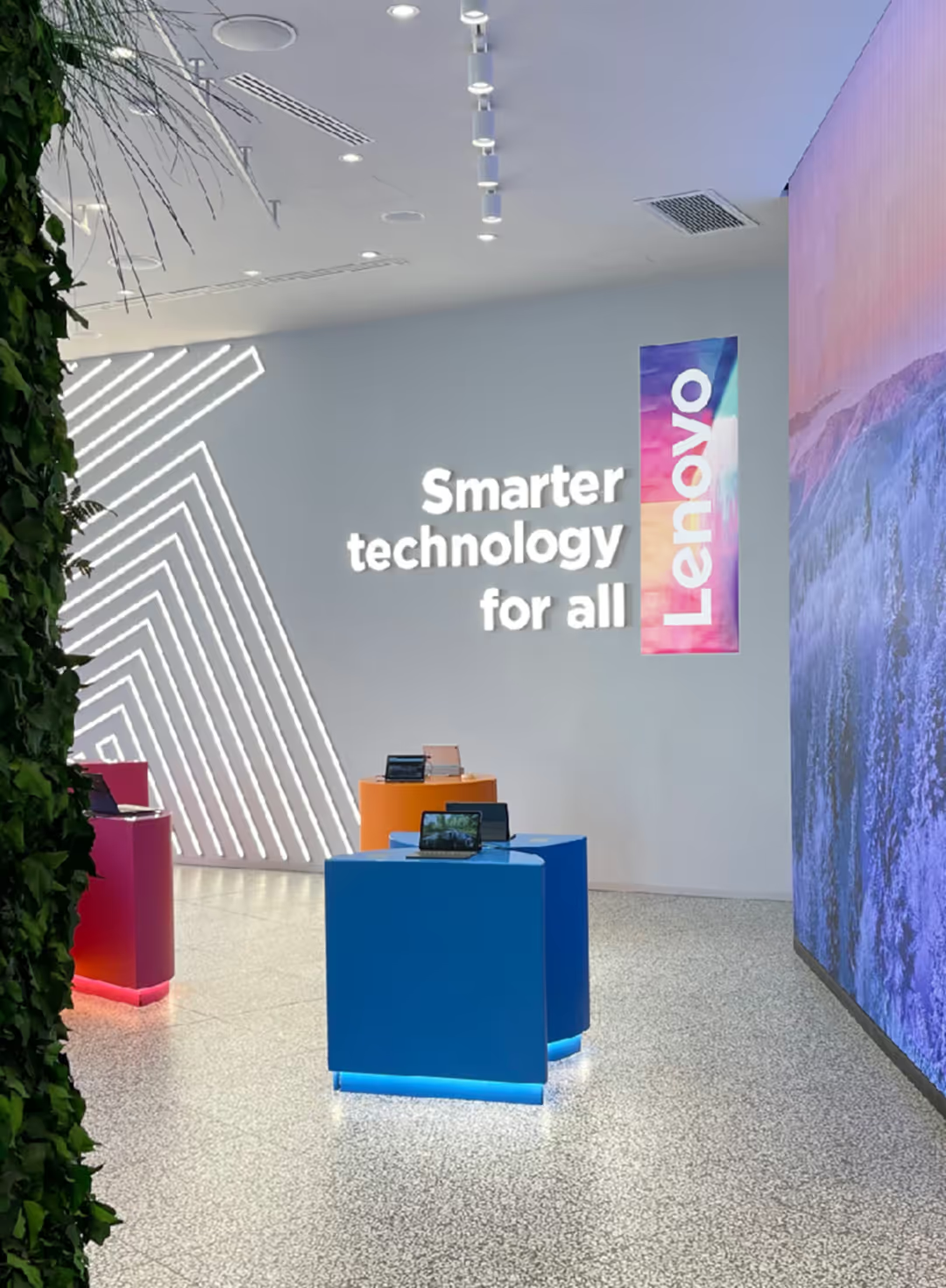
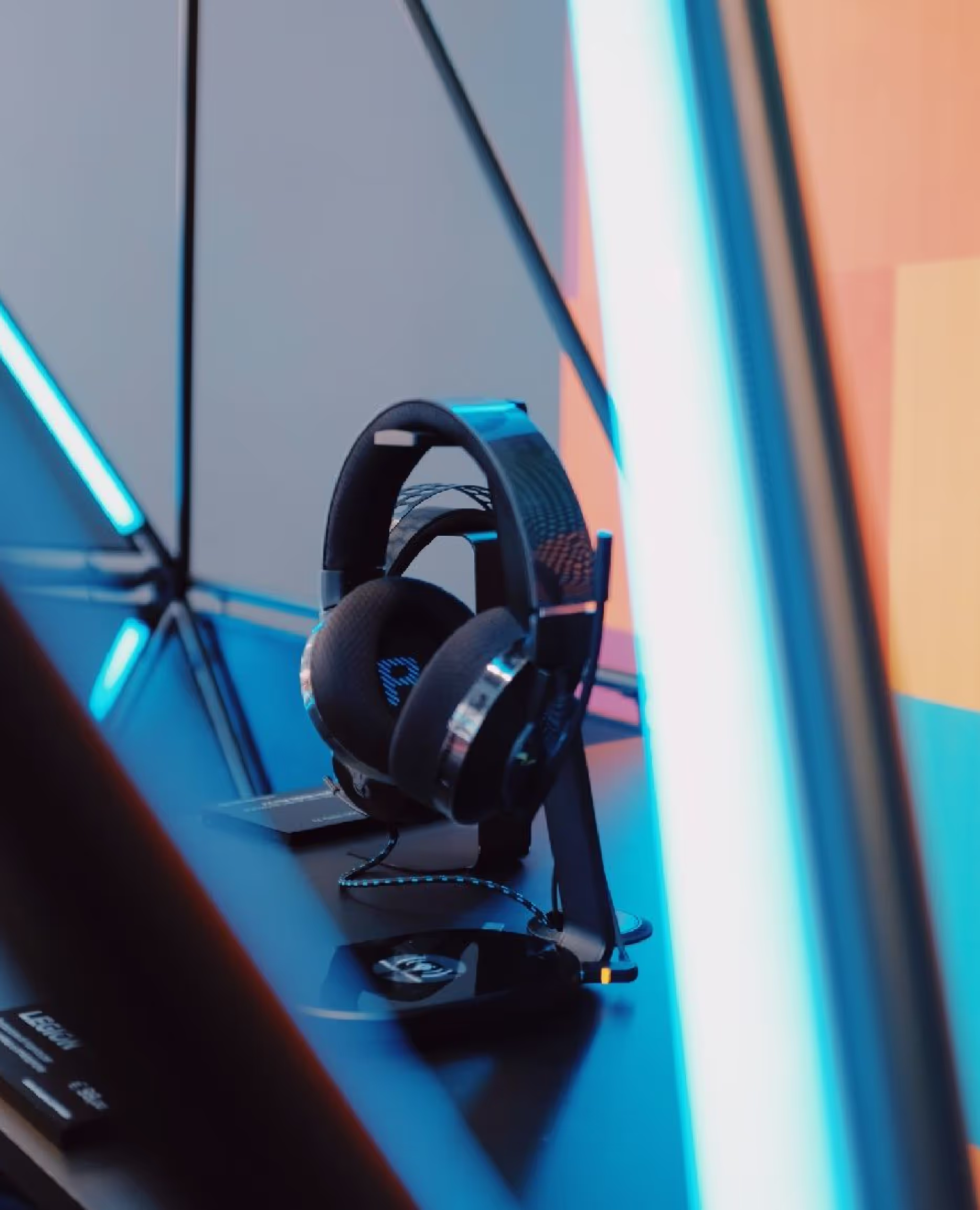
Every element was designed as a module: the consultation pods, the product displays, the Legion gaming area, the accessories wall. Each module had documented specifications, approved vendors, and installation guides.
Every element was designed as a module: the consultation pods, the product displays, the Legion gaming area, the accessories wall. Each module had documented specifications, approved vendors, and installation guides.
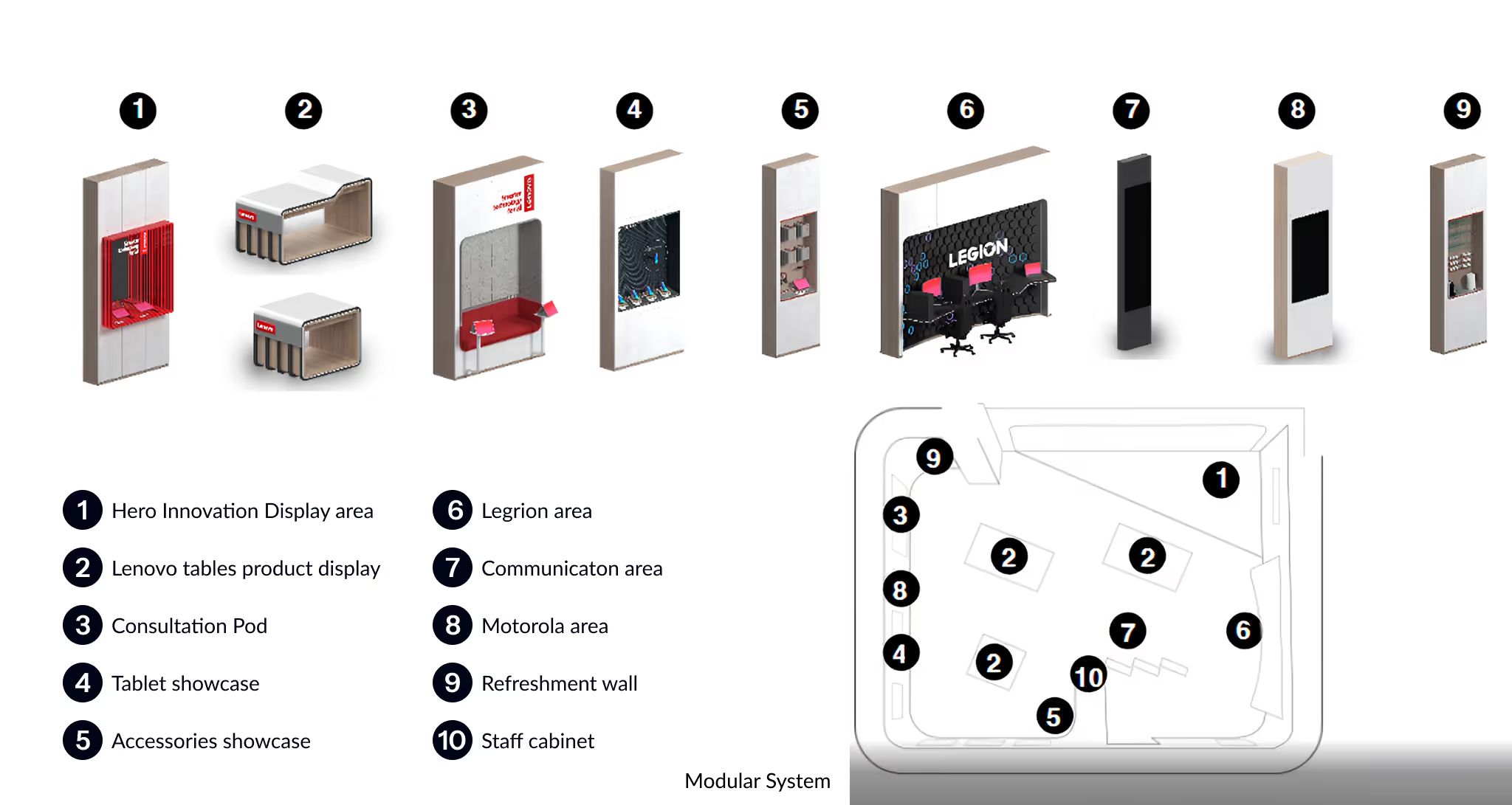
This is what enabled global scale. When Lenovo decided to expand, they didn’t need to hire us again for each country. They had a playbook.
WHAT HAPPENED
Prices went up 15% globally without losing volume. That’s the number that matters most, because price increases that stick are rare. Customers were willing to pay more for the same products because the experience justified it.
Sales cycles compressed from 3 visits to 1.7. Customers made decisions faster because they understood the products better. Win rates against Dell and HP in the premium segment nearly doubled.
The Milan store manager captured it simply: “Before, customers compared us to competitors on a spreadsheet. Now they compare experiences. We win that comparison every time.”
The executive sponsor who pushed for this transformation was promoted to Head of Global Retail. The Italian pilot became the model for 14 countries. The Retail Design Institute 'Best of the Best' award in 2020 validated what the business metrics had already proven.
Sales cycles compressed from 3 visits to 1.7. Customers made decisions faster because they understood the products better. Win rates against Dell and HP in the premium segment nearly doubled.
The Milan store manager captured it simply: “Before, customers compared us to competitors on a spreadsheet. Now they compare experiences. We win that comparison every time.”
The executive sponsor who pushed for this transformation was promoted to Head of Global Retail. The Italian pilot became the model for 14 countries. The Retail Design Institute 'Best of the Best' award in 2020 validated what the business metrics had already proven.
WHAT I TOOK AWAY
Technology brands fight commoditization by adding features. Competitors match those features within months. The escape route isn’t better specs. It’s better experiences.
The partner coordination problem taught me something I use on every project since: the design is maybe 30% of the work. The other 70% is making sure it actually gets built correctly across dozens of stakeholders who have never worked together before. The obsessive documentation we created after Milan’s rough start is why 14 countries could implement without repeating our mistakes.
Premium positioning requires three things: an experience worth paying for, continuity across every touchpoint, and engagement that extends beyond the transaction. Get all three right, and price competition disappears.
The partner coordination problem taught me something I use on every project since: the design is maybe 30% of the work. The other 70% is making sure it actually gets built correctly across dozens of stakeholders who have never worked together before. The obsessive documentation we created after Milan’s rough start is why 14 countries could implement without repeating our mistakes.
Premium positioning requires three things: an experience worth paying for, continuity across every touchpoint, and engagement that extends beyond the transaction. Get all three right, and price competition disappears.
