FASTWEB NeXXt
14% Churn Reduction, Control Group Validated
2M Consumers | 18-Month Study | iF Design Award 2022

RESULTS
- Churn: Down 14% vs. control group (1M customers on NeXXt vs. 1M on legacy hardware, tracked 18 months)
- ARPU: Up 12%, customers willing to pay premium for better experience
- 24-month retention: 22% better than control group
- Support costs: Down 18% through voice-enabled self-service
- NPS: 62 to 74
- Reach: 2M+ consumers with repositioned product
Recognition: iF Design Award 2022 for Service Design and Product
The control group methodology became Fastweb’s standard for evaluating any major product investment. That’s the part that transferred.
The control group methodology became Fastweb’s standard for evaluating any major product investment. That’s the part that transferred.
THE STORY
In 2020, Fastweb had a problem that every telecom faces: customers only cared about price. The internet router, the device that actually sits in people’s homes, was completely invisible. Hidden behind furniture. Forgotten until something broke.
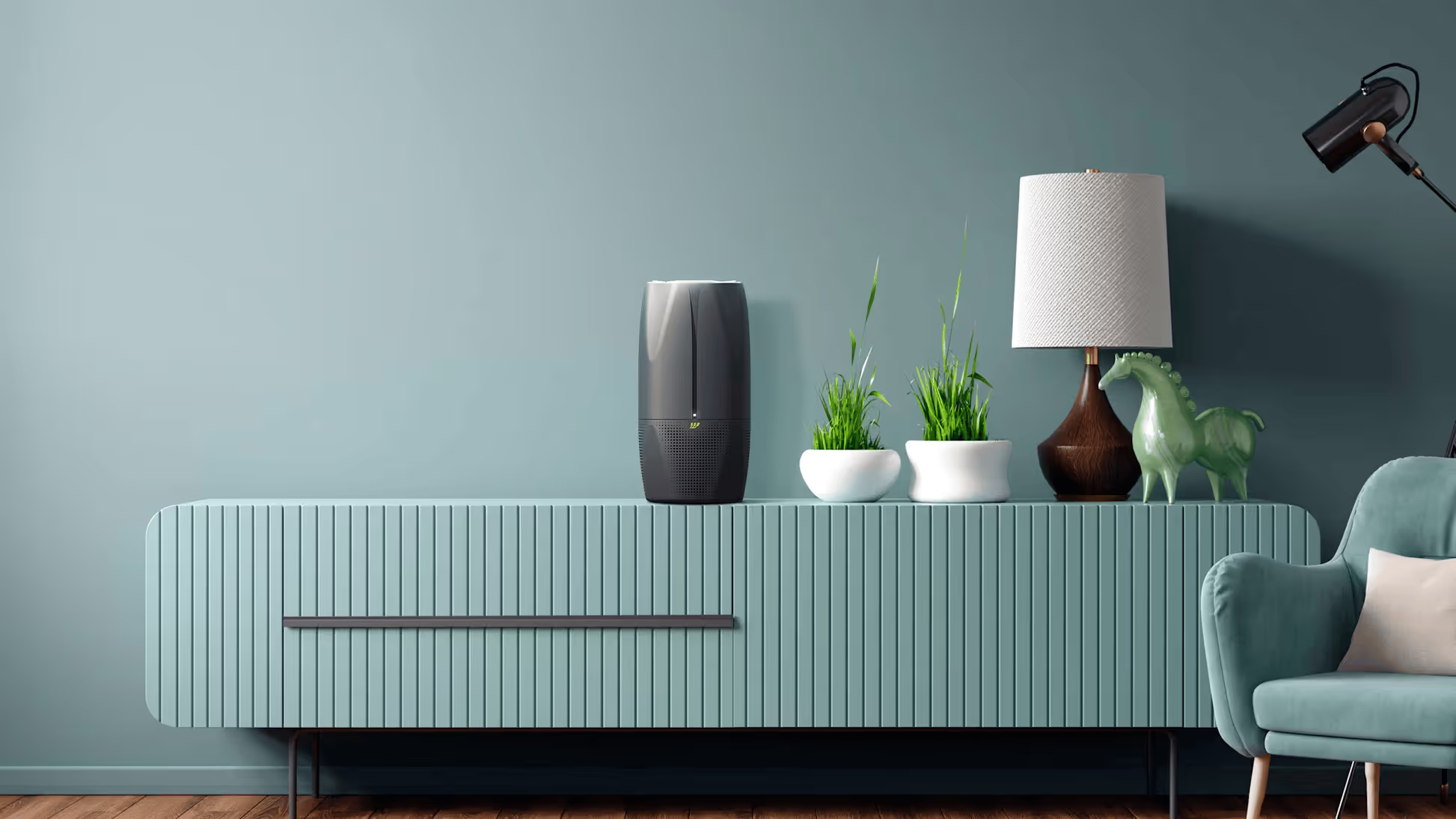
The brief was to design Italy’s first voice-enabled router. But the real opportunity was bigger: could we turn a commodity utility into something people actually wanted to display in their living rooms?
The brief was to design Italy’s first voice-enabled router. But the real opportunity was bigger: could we turn a commodity utility into something people actually wanted to display in their living rooms?
WHAT MADE THIS DIFFERENT
Most product launches measure success through sales and reviews. We did something unusual: we set up a control group.One million customers received NeXXt.
One million stayed on legacy hardware. We tracked both groups for 18 months on the same metrics: churn, support calls, NPS, revenue per user.
The methodology came from a question I asked early: “How will we know this actually worked, versus customers just being excited about something new?” The Fastweb analytics team had the data infrastructure to run the experiment properly. Most companies don’t bother. We did.
One million stayed on legacy hardware. We tracked both groups for 18 months on the same metrics: churn, support calls, NPS, revenue per user.
The methodology came from a question I asked early: “How will we know this actually worked, versus customers just being excited about something new?” The Fastweb analytics team had the data infrastructure to run the experiment properly. Most companies don’t bother. We did.
MY ROLE
Strategy Director, Sketchin (BIP Group)
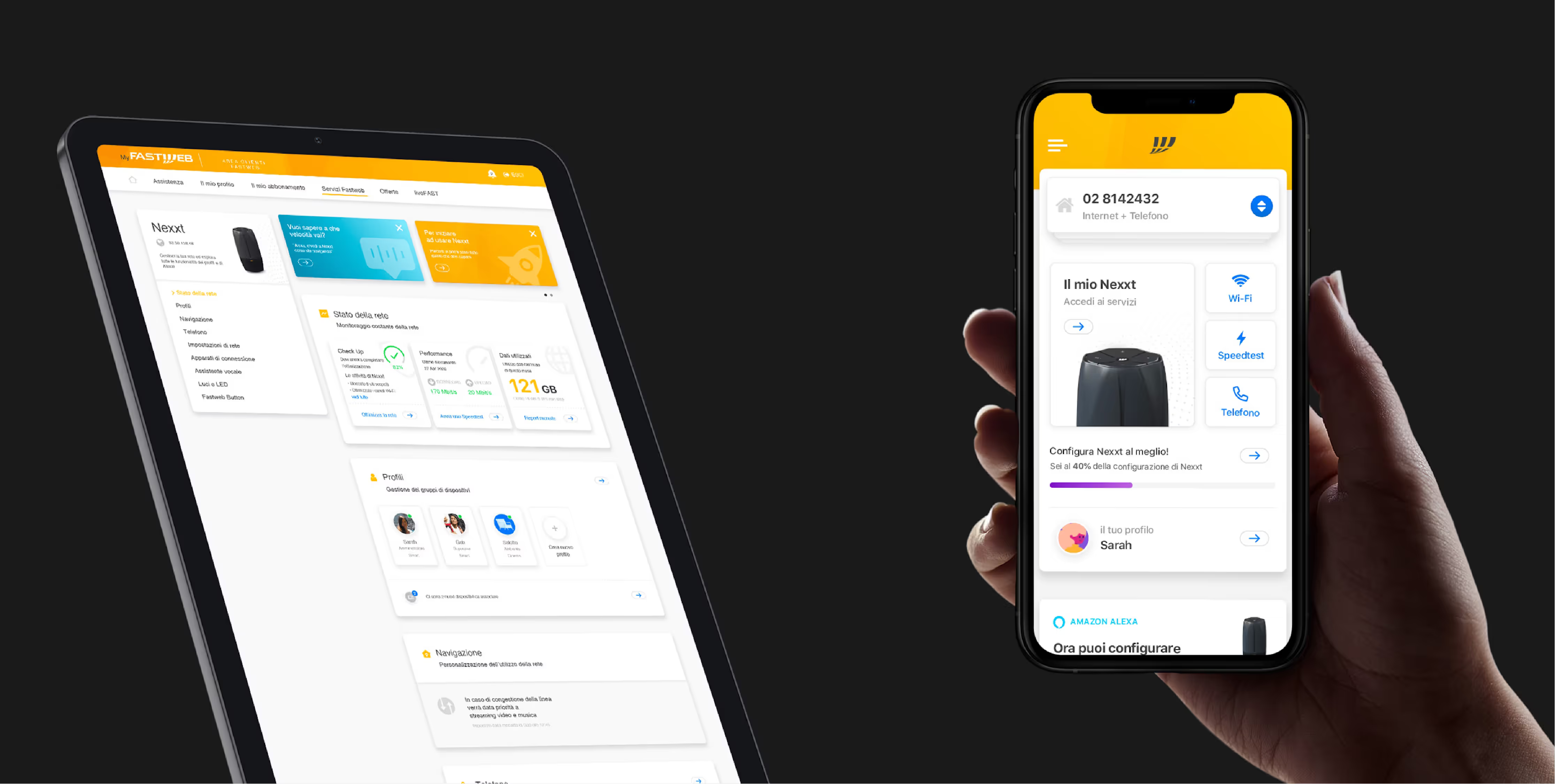
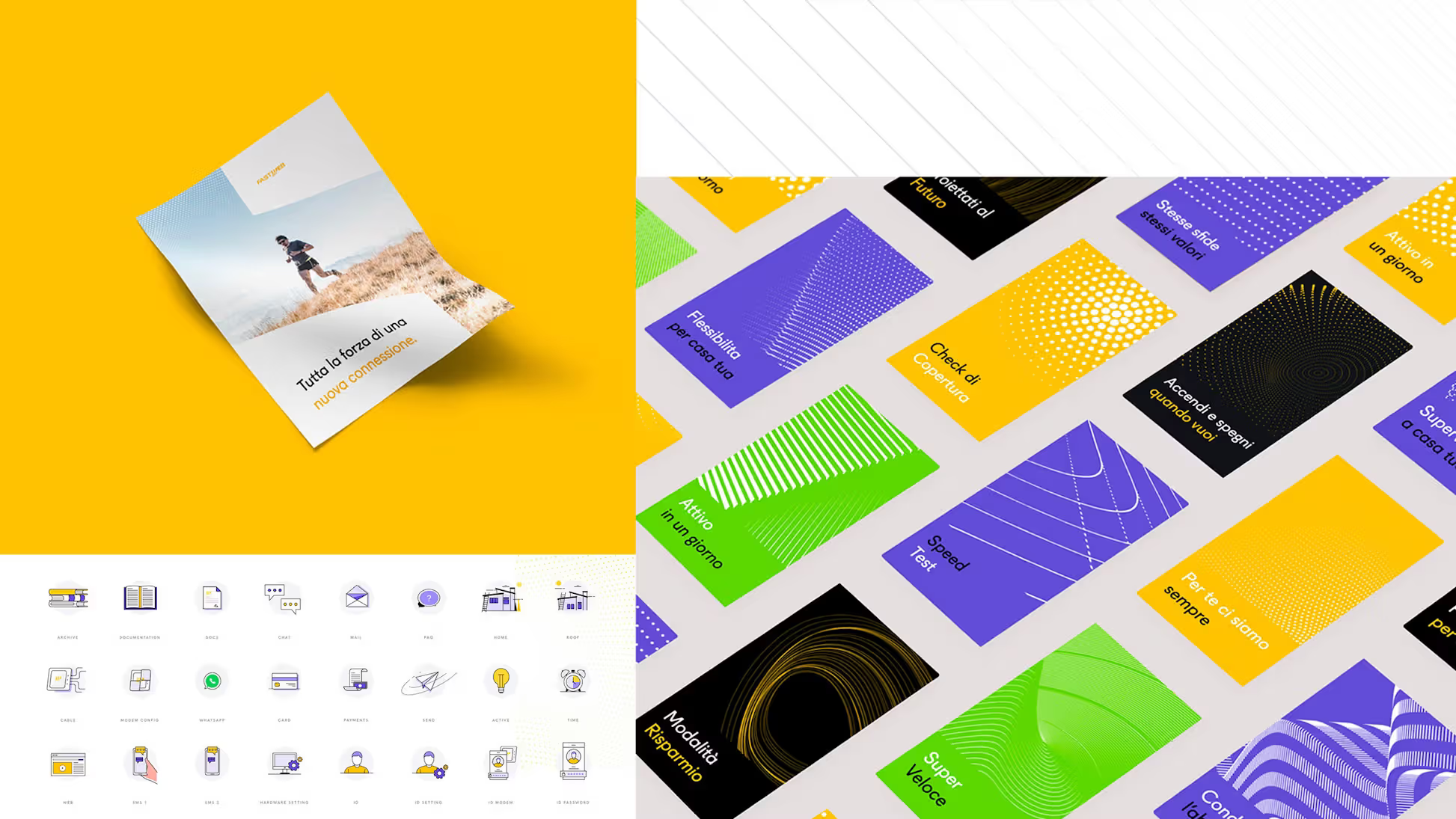
I led the end-to-end product ecosystem design: hardware positioning, voice interface framework, app experience, brand identity, and go-to-market strategy. The engagement ran 18 months from first research to market launch.
I led the end-to-end product ecosystem design: hardware positioning, voice interface framework, app experience, brand identity, and go-to-market strategy. The engagement ran 18 months from first research to market launch.
WHAT I ACTUALLY DID
The Research
We started by understanding why routers were invisible. The answer was obvious once we looked: they were ugly, utilitarian boxes designed to be hidden. Nobody had tried to make one worth displaying.
The insight wasn’t complicated. Voice assistants had normalized talking to devices. Premium home objects (speakers, lamps, furniture) had proven people would pay more for things they were proud to show. The router was the missing piece.
We started by understanding why routers were invisible. The answer was obvious once we looked: they were ugly, utilitarian boxes designed to be hidden. Nobody had tried to make one worth displaying.
The insight wasn’t complicated. Voice assistants had normalized talking to devices. Premium home objects (speakers, lamps, furniture) had proven people would pay more for things they were proud to show. The router was the missing piece.
The COVID Problem
Three weeks into the project, Italy went into lockdown. We had 40 people across 8 departments who needed to co-design a hardware product, a voice interface, and a digital ecosystem. Entirely remote.
I won’t pretend we had this figured out. The first month was chaos. Design reviews over video calls don’t work the same way. You can’t sketch on a whiteboard together. People talked over each other or stayed silent.
What saved us was breaking the work into smaller pieces with clearer ownership. Instead of big collaborative sessions, we ran short focused reviews. One person presented, others gave feedback, decisions happened in the room. It was slower than I wanted, but it worked.
Three weeks into the project, Italy went into lockdown. We had 40 people across 8 departments who needed to co-design a hardware product, a voice interface, and a digital ecosystem. Entirely remote.
I won’t pretend we had this figured out. The first month was chaos. Design reviews over video calls don’t work the same way. You can’t sketch on a whiteboard together. People talked over each other or stayed silent.
What saved us was breaking the work into smaller pieces with clearer ownership. Instead of big collaborative sessions, we ran short focused reviews. One person presented, others gave feedback, decisions happened in the room. It was slower than I wanted, but it worked.
The Voice Integration
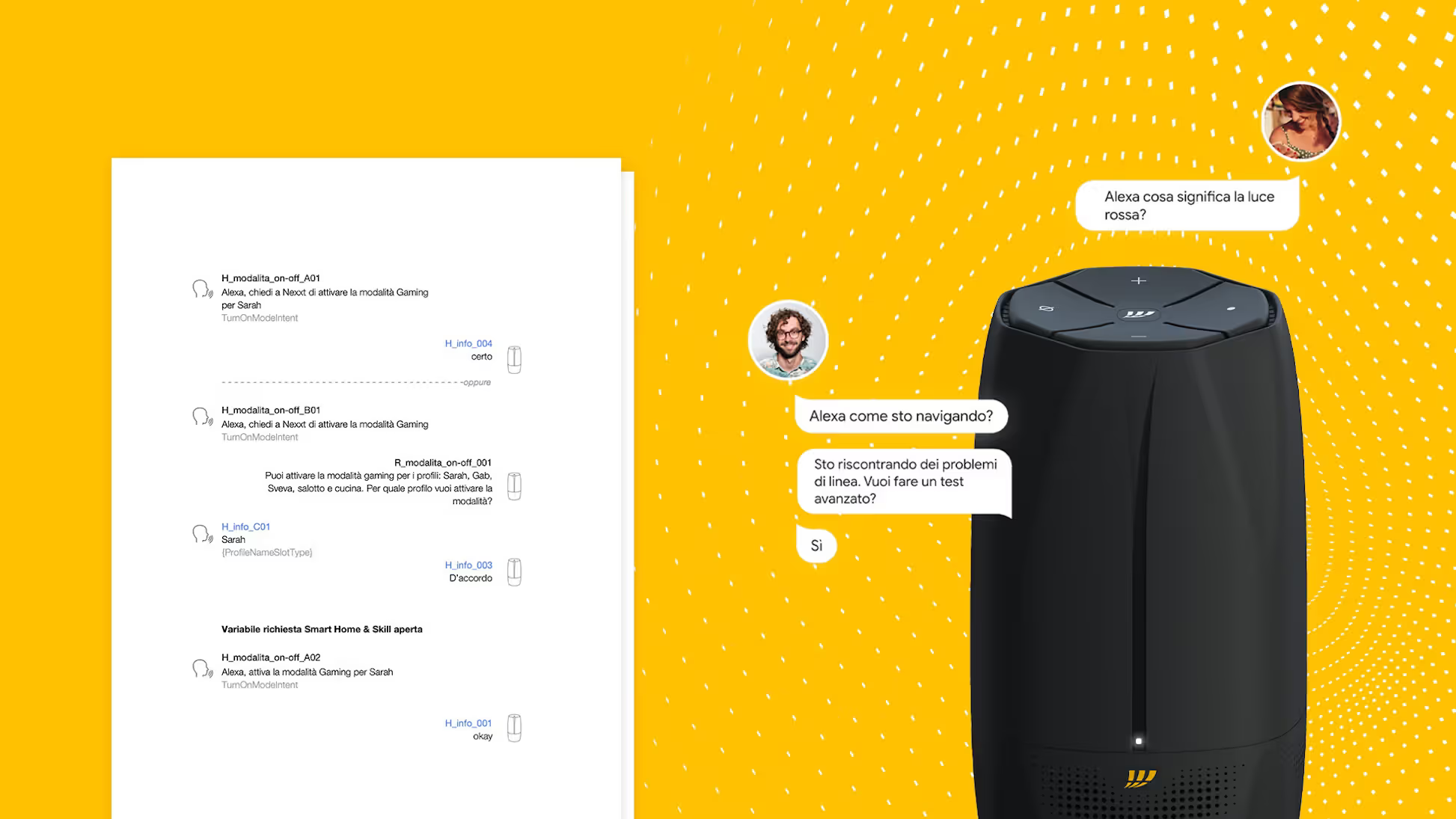
We integrated Amazon Alexa with 30+ custom voice commands for network management, parental controls, and digital wellness. Things like: “Alexa, check my connection speed.” “Alexa, turn off Sarah’s internet.” “Alexa, activate gaming mode.”
The voice commands weren’t just features. They were the reason the router needed to be visible. You can’t talk to something hidden behind a couch.
We integrated Amazon Alexa with 30+ custom voice commands for network management, parental controls, and digital wellness. Things like: “Alexa, check my connection speed.” “Alexa, turn off Sarah’s internet.” “Alexa, activate gaming mode.”
The voice commands weren’t just features. They were the reason the router needed to be visible. You can’t talk to something hidden behind a couch.
The Design Bet
We designed the hardware to be displayed, not hidden. Premium materials. A form factor that looked intentional. No visible cables. The positioning internally was “the Nespresso of routers”: take a utilitarian category, apply design thinking, create premium perception.
We designed the hardware to be displayed, not hidden. Premium materials. A form factor that looked intentional. No visible cables. The positioning internally was “the Nespresso of routers”: take a utilitarian category, apply design thinking, create premium perception.
WHAT HAPPENED
The control group data came in over 18 months. NeXXt customers churned 14% less than the control group. They called support 18% less often. They paid 12% more in average revenue. Their NPS was 12 points higher.
The iF Design Award helped internally more than externally. Before the award, NeXXt was a product launch. After, it was proof that the approach worked. A Fastweb executive told me: “We used to lose customers to whoever offered cheaper. Now customers stay because they love the product. Some even display it in their living rooms.”
NeXXt became the blueprint for how Fastweb thinks about product launches. Not because it won recognition, but because the control group proved the model worked with data, not opinions.
The iF Design Award helped internally more than externally. Before the award, NeXXt was a product launch. After, it was proof that the approach worked. A Fastweb executive told me: “We used to lose customers to whoever offered cheaper. Now customers stay because they love the product. Some even display it in their living rooms.”
NeXXt became the blueprint for how Fastweb thinks about product launches. Not because it won recognition, but because the control group proved the model worked with data, not opinions.
WHAT I TOOK AWAY
Telecom is a brutal market. Competitors can match any price cut within weeks. The only sustainable differentiation is a product people actually care about.
The control group methodology was the thing that made this defensible. Without it, we’d have had opinions about whether NeXXt worked. With it, we had proof. The 14% churn difference wasn’t a feeling. It was a million customers measured against a million customers over 18 months.
Most companies skip this step because it’s expensive and slow. But it’s the difference between “we think this worked” and “we know this worked.” For a company making multi-million euro product bets, that certainty matters.
The control group methodology was the thing that made this defensible. Without it, we’d have had opinions about whether NeXXt worked. With it, we had proof. The 14% churn difference wasn’t a feeling. It was a million customers measured against a million customers over 18 months.
Most companies skip this step because it’s expensive and slow. But it’s the difference between “we think this worked” and “we know this worked.” For a company making multi-million euro product bets, that certainty matters.
